Y.M. Pang can be found at:
- Website: https://www.ympang.com/
- Twitter: @YMPangWriter
- Instagram: https://www.instagram.com/
- Bluesky: https://bsky.app/profile/ympang.bsky.social

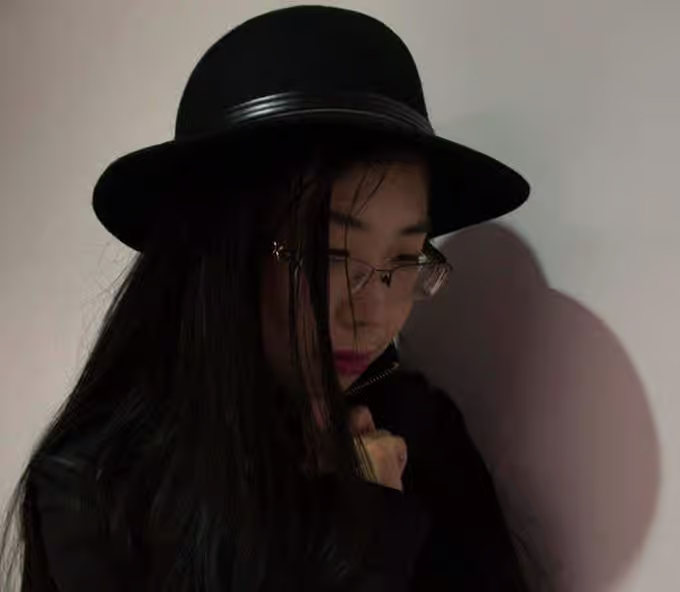
Don: First up, congratulations on your first Aurora Award nomination! Or… wait. Second? Third? Hold on, explain this to me.
Y.M. Pang: Fourth. I’m nominated in two categories this year, Best Short Story (for “Blood and Desert Dreams”) and Best Poem/Song (for “Cthulhu on the Shores of Osaka”). I have two previous nominations: “Little Inn on the Jianghu” for Best Short Story in 2020 and “Electra” for Best Poem/Song in 2021.
“Blood and Desert Dreams” is your nominated story for 2024. What gave you the idea to kill with one’s own blood?
Several years ago, I wrote the first few chapters of a steampunk fantasy novel where the main character uses blood magic. That character’s powers were a little more indirect: she would draw a symbol with her blood to channel her magic. The magic itself actually consisted of teleporting objects. Then I started wondering, why not have the blood itself be magic?
Given the fascinating relationship between the assassin Kahna and Lady Darya and Kahna meeting Felderic, do you consider the story to be about finding where one truly belongs?
If this story is about finding where one truly belongs, I don’t think people would like the answer very much…
More seriously: it is a dark twist on the concept of found family and choosing where you belong. For most of her life, Kahna sees Lady Darya’s household as her “found family,” as where she truly belongs rather than among her mother’s people. Even as the guilt of her assignments threatens to tear her apart, she clings on to her loyalty to Lady Darya.
Felderic’s arrival upends all this. He is the first person to offer an alternative—and in doing so, brings up a question: can we actually choose something if we were never given another option? But can one lifeline undo years of conditioning and loyalty? I’m not so sure. Hence the fractured ending. Kahna’s chooses her home, but what is home—Lady Darya’s cruel embrace, or the unknown desert sands? Whatever ending you interpret as the canon one: it is Kahna’s choice, in a twisted way. Perhaps a choice coloured by indoctrination and trauma, but still her choice.

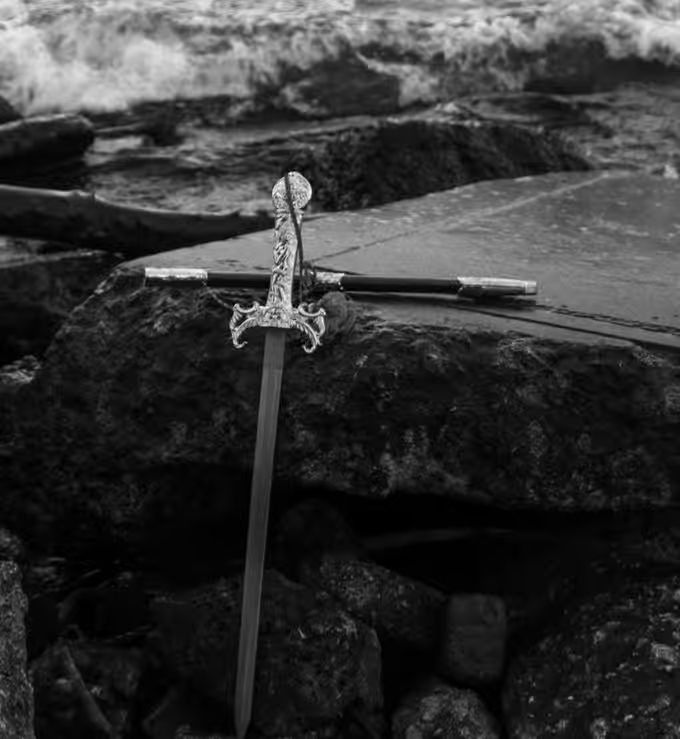
Regarding the All the Broken Blades exclusive, “The Laughing Knight and the King of Ink,” it’s a statement on the pen being mightier than the sword, right? Right?
Sure! Let’s pretend that’s was the intent and I didn’t just want to make a pun out of King Arthur…
Wait, what pun?
King Author.
Too complex for me! So what did happen between the ending of the story and the, ah, epilogue? What made you put the epilogue at the start?
I envision classic story beats of Arthurian mythology happened. Lancelot kills Gawain’s brothers in his “rescue” of Guinevere (and later kills Gawain himself). The rift between Arthur and Lancelot weakens the kingdom. In classic mythology, Mordred (who happens to be Arthur’s bastard son) seizes control of Arthur’s kingdom, and Arthur and Mordred kill each other in the final battle. Now, does it happen exactly like this here? I don’t know, but I keep the strong implications of bloodshed between Lancelot and Gawain’s family, and how Lancelot and Bedivere are two knights who outlive Arthur and mourn him.
I placed the epilogue at the beginning because I wanted the flavour of a “how we got here” story. The epilogue is meant to make more sense with the understanding of Arthurian myth and Arthur’s prophetic words in the final scene.

How fun was it determining the weird new behaviors for the Knights of the Round Table?
Instead of just making them weird at random, I wanted to still reflect their classic portrayals. Gawain is loyal and brave, but has a nasty temper. Tristan is usually portrayed as a romantic musician, so I made him a literal dreamer. Even Mordred, who doesn’t even appear on the page, is noted as having sneaked off (thus escaping Arthur’s powers), in line with his role as the eventual rebel/traitor.
Lancelot is a walking contradiction: simultaneously portrayed as the best and most honourable knight, but also the one who sleeps with King Arthur’s wife (???). This story is almost my attempt at reconciling this. Why would this supposedly loyal knight, who is portrayed as one of Arthur’s best friends, do such a thing? And why did Arthur turn a blind eye? Surely he must’ve known, and as king he had every opportunity to deal with it—but he did not. Of course, I just had to go and find the most absurd explanation ever, but that’s part of the tragicomedy.
Thanks for taking the time to share with us!… again!