In the second of our Aurora Award Finalist interviews, we check in with R H Wesley, author of “A World of Milk and Promises” in Clarkesworld Magazine.
He is also the author of:
– “More Things in Heaven“, Incensepunk Magazine
– “The Dam”, Polymorphic Magazine (due in Aug 2025)
Wesley can be found at:
- Website: https://rhwesley.com/
Don: Could you tell us a little about yourself and how you got into writing?
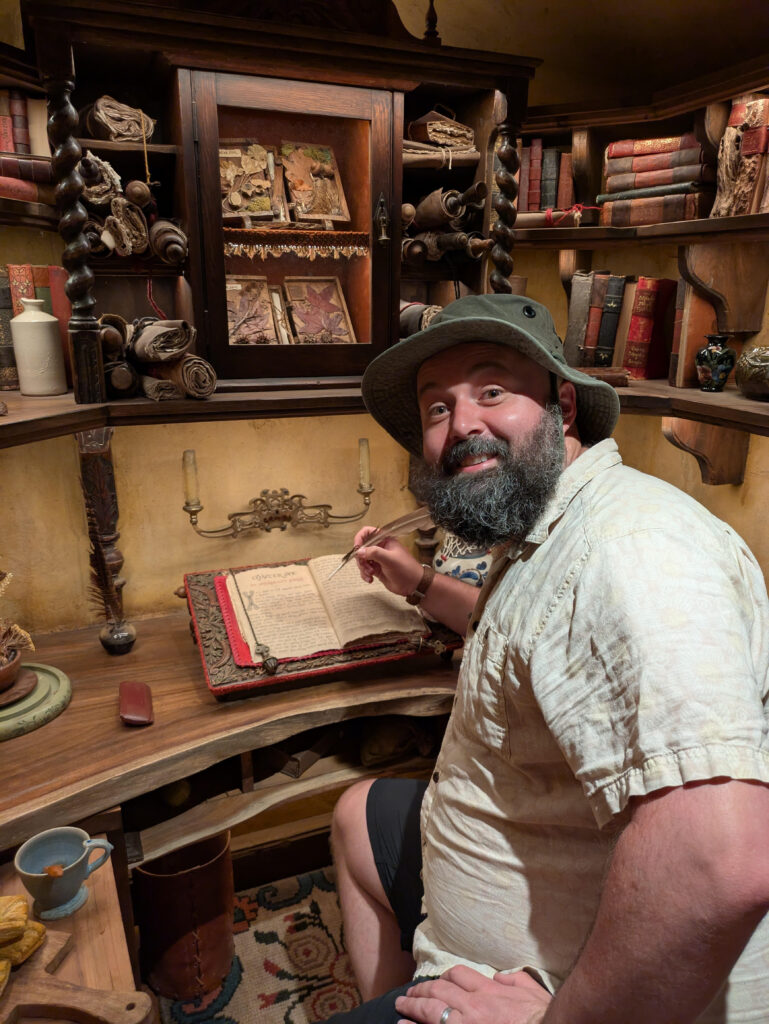
I’m R H Wesley, or Rob, an author from Toronto, Canada. My current day job is in software development, but until a few years ago I was a PhD student in philosophy, with a focus on metaphysics and foundations of physics.
My research at that time brought me into contact with a lot of mind-expanding ideas. As a long-time science fiction fan, I believed that these would make excellent material for short stories. After all, many of my favorite authors incorporate philosophical concepts into their works: Ted Chiang, Peter Watts, and Dan Simmons to name a few.
When I had some time between jobs back in 2023, I thought that I should jump into the deep end and try my best to put some of these ideas into words. “A World of Milk and Promises” was my first sale of any of my work to a magazine.
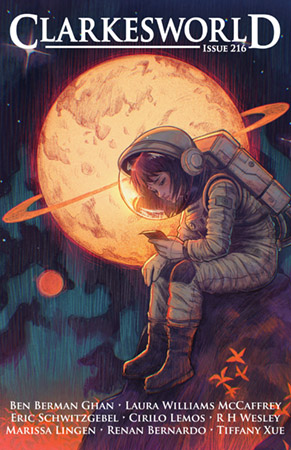
Hold up: Your very first publication was with Clarkesworld, one of the most prestigious scifi magazines on the planet, and now you’re an Aurora Award finalist? You realize how weird that is, right?
This one wasn’t the first story I wrote, nor the first one I sent out to magazines—and I’ve had my fair share of rejections since. But I’m certainly excited and humbled by this story’s success and all the support for it that I’ve received from the Canadian SFF community.
I’m a long-time fan of Clarkesworld. In fact, the first story that ever got me interested in science fiction was “The Things” by Peter Watts, published in Clarkesworld in 2010. I would definitely recommend the magazine to those who enjoy thought-provoking fiction that brings together interesting ideas and strong characters. They also have an awesome and active discord group for subscribers, where you can keep up with readers and other authors.
I think that selling a story in such a high-profile market was likely only possible due to my working with all the great people at Toronto Science Fiction and Fantasy Writers. Having a group of welcoming, interested and skillful readers is vital to improving your craft. And I’ve always maintained that providing feedback on others’ work is equally as important.
Having read “A World of Milk and Promises”, I have to ask: are you okay?
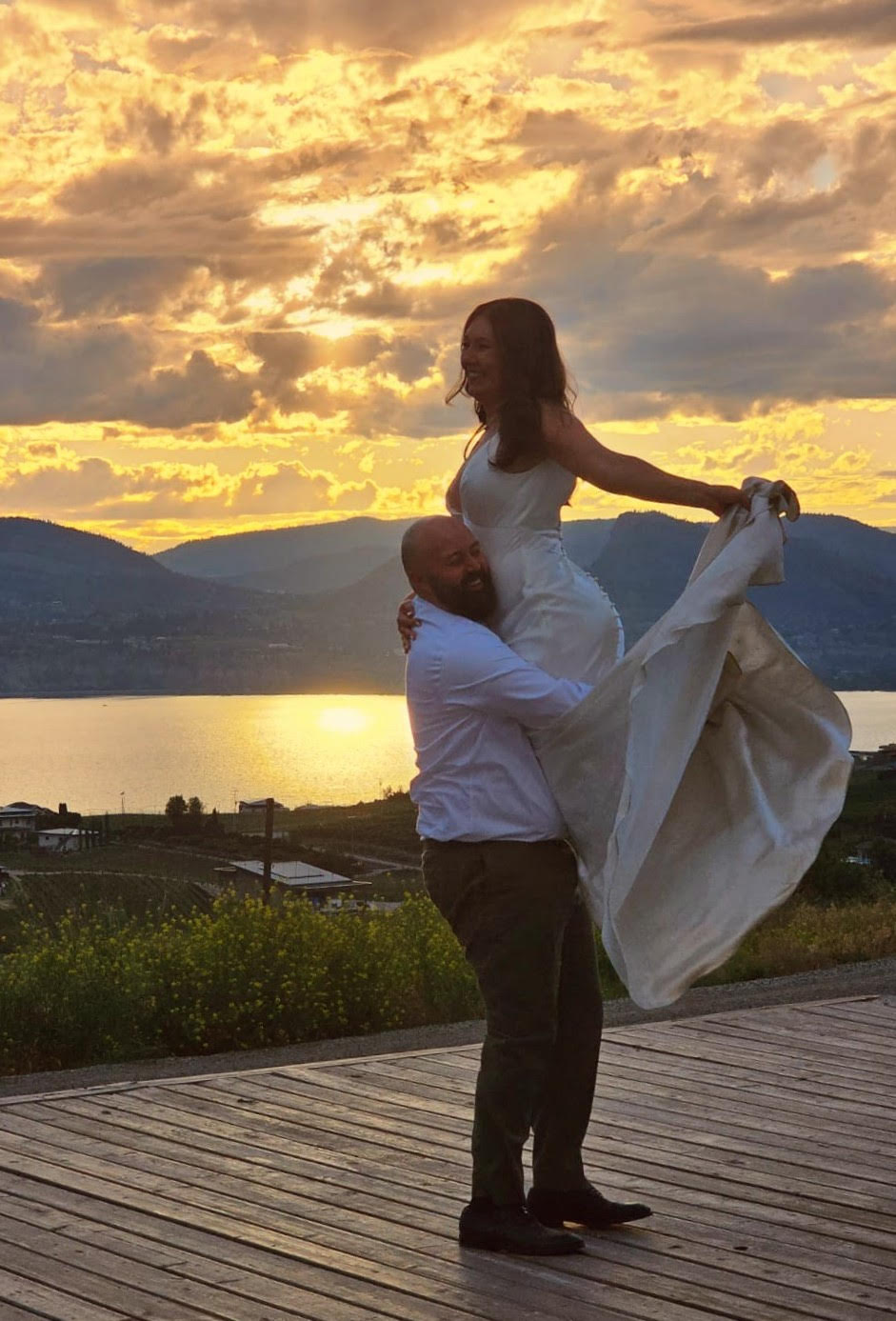
I’m doing great! In fact, this story was written during one of the happiest periods of my life: the days leading up to my wedding and during my honeymoon.
As I was figuring out my vows, I was thinking a lot about what it means to promise to love someone despite how they might change in the future. That’s when I first thought about a mother who continues to love their child even after they have been transformed into something very different, very alien.
I think that this story incorporates horrific elements, absolutely. Or at least, they seem horrific from a human perspective. But my intention was always to communicate something unfathomable and beautiful under the surface.
Given the fantastical, bizarre history of the characters, space station, and planet, did you plot it all out before writing the story? Or did you make it up as you went along?
Sometimes, my stories begin with a single image. That was definitely the case here—I knew from the beginning that I wanted to have a mother living within the enormous ribcage of her child. The rest of the story fell into place in order to support that central vision.
Much of the alien setting was inspired by the television show Scavengers Reign, as well as other alien-ecosystem survival media such as Annihilation, Nausicaä, Rain World and Earthborne Rangers. I love how each of these works present ecosystems that are truly alien, and that are unwilling to conform to our prior expectations of how nature should behave.
With the central theme and setting in place, I think the rest of the story basically wrote itself. I’m lucky that the themes of human parenthood, nourishment and self-sacrifice lined up so nicely with my world of complete symbiosis. Sometimes the best stories are the ones that surprise you with connections between themes you might not have even intended.
Spoiler Alert: Do you feel the end of the story is truly the end for the protagonist?
This story is purposefully left ambiguous, but I’ll say that there is definitely more going on than what I state explicitly in the text. I’ll only hint that perhaps there is some unified intelligent force behind the natural process of the protagonist’s death and transformation. Something seems to be trying to communicate with her through her hallucinated second child.
I think it’s also helpful to consider that the world of total symbiosis isn’t so different from Earth. Here, life started as entirely competitive—unicellular life forms are only interested in the propagation of their own genes. Eventually, strategies of cooperation emerged in the form of multicellular organisms. Complex life involves communities of cells working together towards their shared preservation and reproduction.
On Earth, this cooperation never reached a global scale—at most we have cooperation between social groups and symbiosis between pairs of species. But couldn’t it have kept going until everything acted like a single unified organism? Is there some possible path that evolution could have taken on Earth that would have resulted in some singular being, or even some singular consciousness?
Whoops, that is definitely more than just a hint at what is going on beneath the surface of this story.
Any chance for a follow-up to “A World of Milk and Promises”? Or do you plan to move onto new frontiers?
I do have works (forthcoming and in-process) that play with similar aesthetics and themes. But none of these really count as a follow-up.
I try to write pieces that are all completely distinct in tone, style and substance. I move between science fiction, philosophical fiction and horror. Though, regardless of genre, I almost always find myself exploring themes of transformation, cancer, pregnancy, family-relationships and the limits of human comprehension. So if you liked this one, I think it’s likely that you’ll enjoy all of the other weird stuff I’m cooking up!
Thanks for taking the time to share with us!
Thank you, Don, for these excellent questions and this chance to reflect on my story! It is currently a finalist for the Aurora Awards, and I would very much encourage everyone to read the nominated works and vote for their favorites!