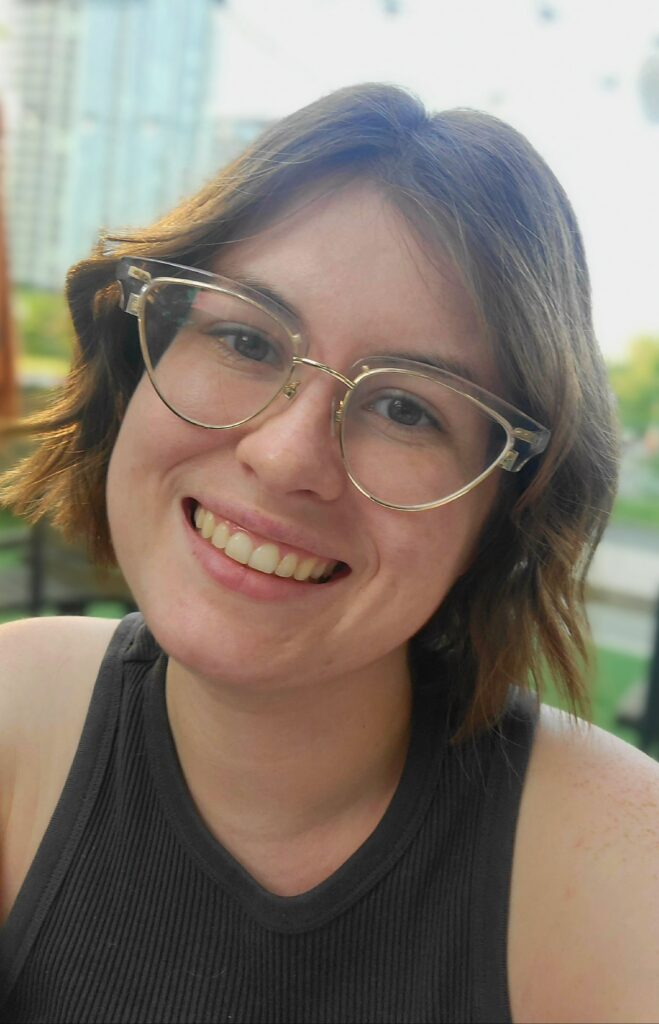
Today we revisit Gillian Secord, who is up for yet ANOTHER Aurora Award this year. This time, it’s for her amazing short story, the love song of house and lake, which appeared in OnSpec #133 vol 25 no 3.
Secord can be found at:
Website: https://gilliansecord.wordpress.com/
BlueSky: @gilliansecord.bsky.social
Don: Starting off light… you’ve penned BUDDY RAYMOND’S NO BULLSHIT GUIDE TO DRONE HUNTING and the love song of house and lake (among others), so just to confirm: you do know how capitalization works?
Gillian Secord: Those are actually the only two stories I’ve ever written with weird capitalization, funnily enough. It’s a quirk of fate that they ended up published right after each other. Although I will admit I do have an eternal fascination with metafiction, and playing with the form a story is told in. So perhaps it’s not that strange that I have two stories out now with weird, deliberate plays on capitalization. I like seeing what forms a story can take on while still telling something compelling.
The characters, tone, plot, and even basic structure of the love song of house and lake are incredibly different from BRNBSGTDH. Was that an attempt to stretch your authorial legs, or did the mood just strike you to show your range?
For me, writing short stories is a bit of a playground; the benefit of something short is that you can experiment with form and voice and narrative structure in a way you can’t when writing a novel. I don’t know that there was an intentional attempt to write something very different with either of these pieces, but I do try and play around and try new things when I write short stories, so most of them do come out quite different from each other. With both of there stories, there was an idea I had, and a narrative voice that immediately attached itself to it, and I said ‘alright, let’s see where this goes.’
Was it a deliberate choice to leave Adrian’s family nameless?
Everyone except Adrian is named by what they are — mother, father, lake, ground. I think when we dream, we see things as their archetypes, not as their exact representations, and it felt fitting that both sides of Adrian’s life are defined in these equally fuzzy, dreamy, ways. He’s the only one in focus, the only real, named person with real, defined edges, and then his edges start blurring too.
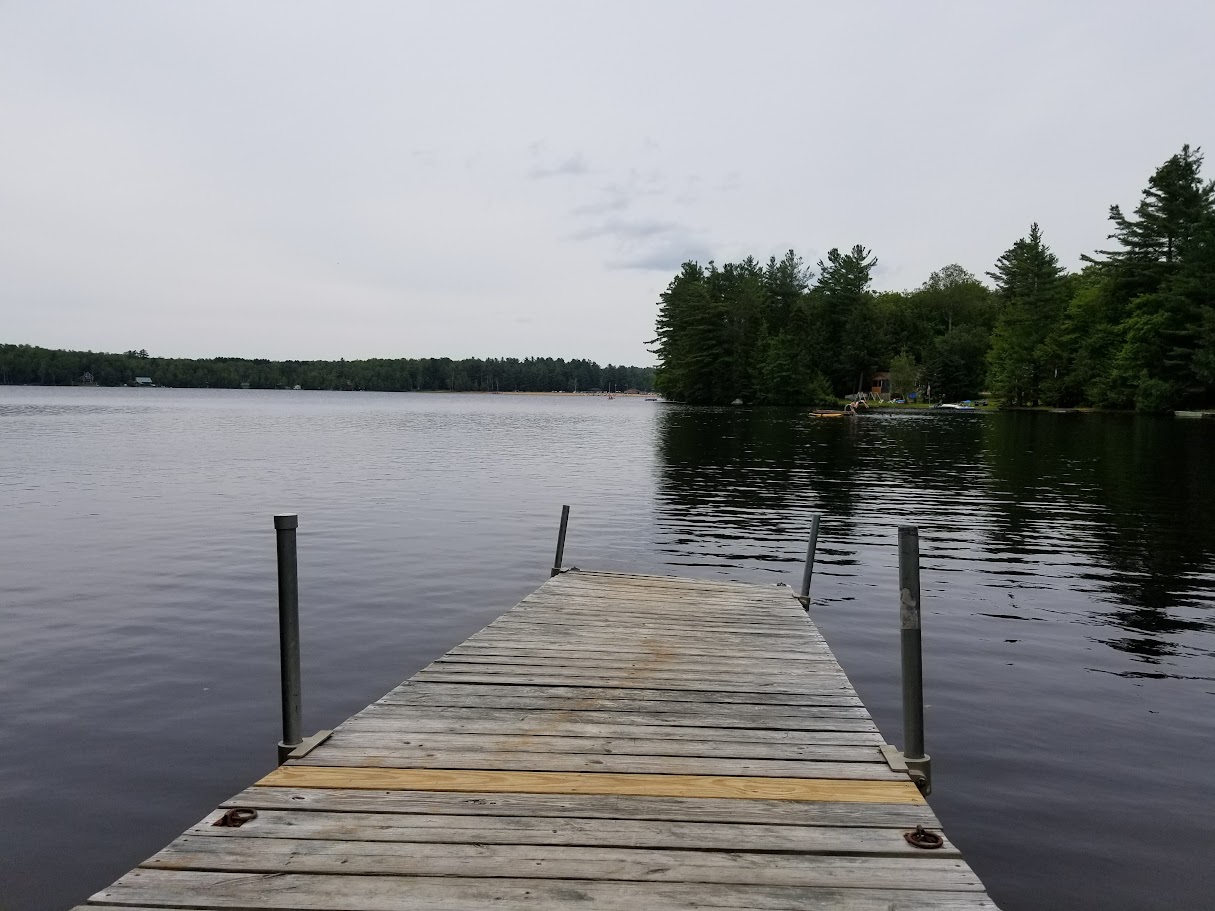
For me, the driving force of the story was the love triangle (not quite the right word… it’s a complex story!) between house, lake, and ground. How in the world did you come up with such an imaginative, dreamlike story? Follow-up: were you at a cottage when inspiration struck?
It was actually the opposite! I wrote this story in the dead of winter, sometime between Christmas and New Years. It was grey and cold and miserable outside, and I started daydreaming about how much I’d rather be sitting around, in the warmth, at a friend’s cottage I had visited the previous summer. It had this excellent view across a wide expanse of land to the lake, and I began wondering what these places did when no one was there and they were bored and alone, and looking at each other from so far away. The story snowballed from there.
I think the strange and dreamlike feel comes from that — it’s all based on this very rosy, idealized summer I wanted to escape into.
“See?” house says. “Better.”’
I’m no stranger to weirdly capitalized characters, with Her from Pale Grey Dot, so I wonder if you had any trouble with lake and house being parsed in lowercase? Was there ever a worry you’d confuse the reader?
I tried to be very deliberate with how I used the words lake and house in the story — it’s part of the reason why I have them introduce themselves by name the first time they appear, so the lowercase name thing is established early. But I wanted them lowercase because I didn’t want the words to be names — it’s just what they are, there’s no distinction between the noun and the proper noun. There is also a subtle shift in the story, where Adrian begins by referring to the physical locations as ‘the house’ or ‘the lake’, and slowly dropping ‘the’ as the lines begin to blur between the people and the places.
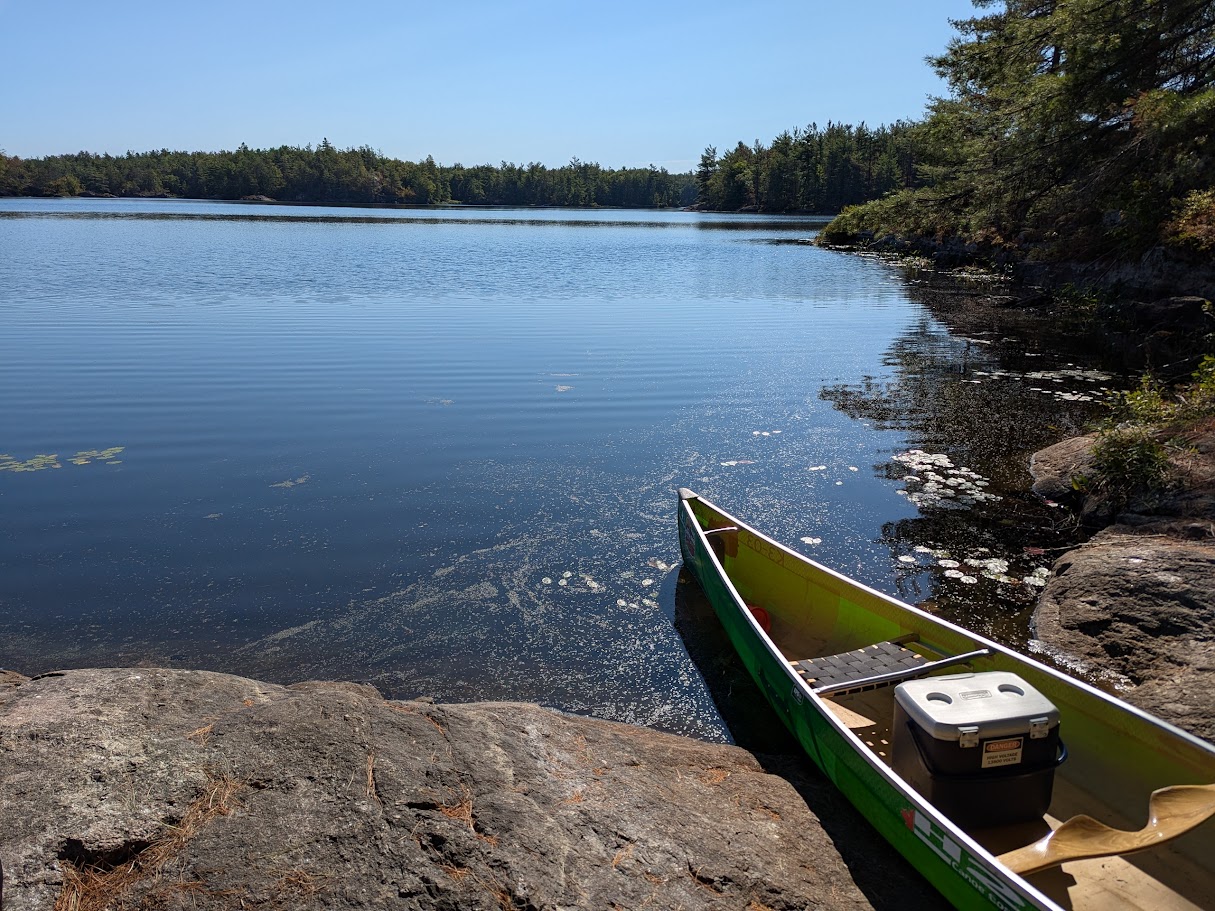
The story hints at a much greater mythology, hidden just beyond Adrian (and the reader’s) sight. In particular, if ground (both new and old) need to be buried in the, ah, ground to become, um, ground, does the same apply to lake and house? That is to say: is there a human lake buried in the lake, and a human house buried somewhere in the house?
I don’t like telling people the ‘correct’ way to interpret my stories, but if you look for it, I think there are clues in the narrative that point to how lake and house ended up where they are. Do I have my thoughts on this? Of course, but part of the fun with writing stories that are small pieces of much bigger worlds is that it leaves lots of space for readers to imagine beyond the edges of the page.

Thanks for taking the time to share with us, and good luck at the Aurora Awards!